Grocery Shopping on the 50/20/30 Rule: Build Your Essential Grocery List During Inflation (With Budget Calculator)
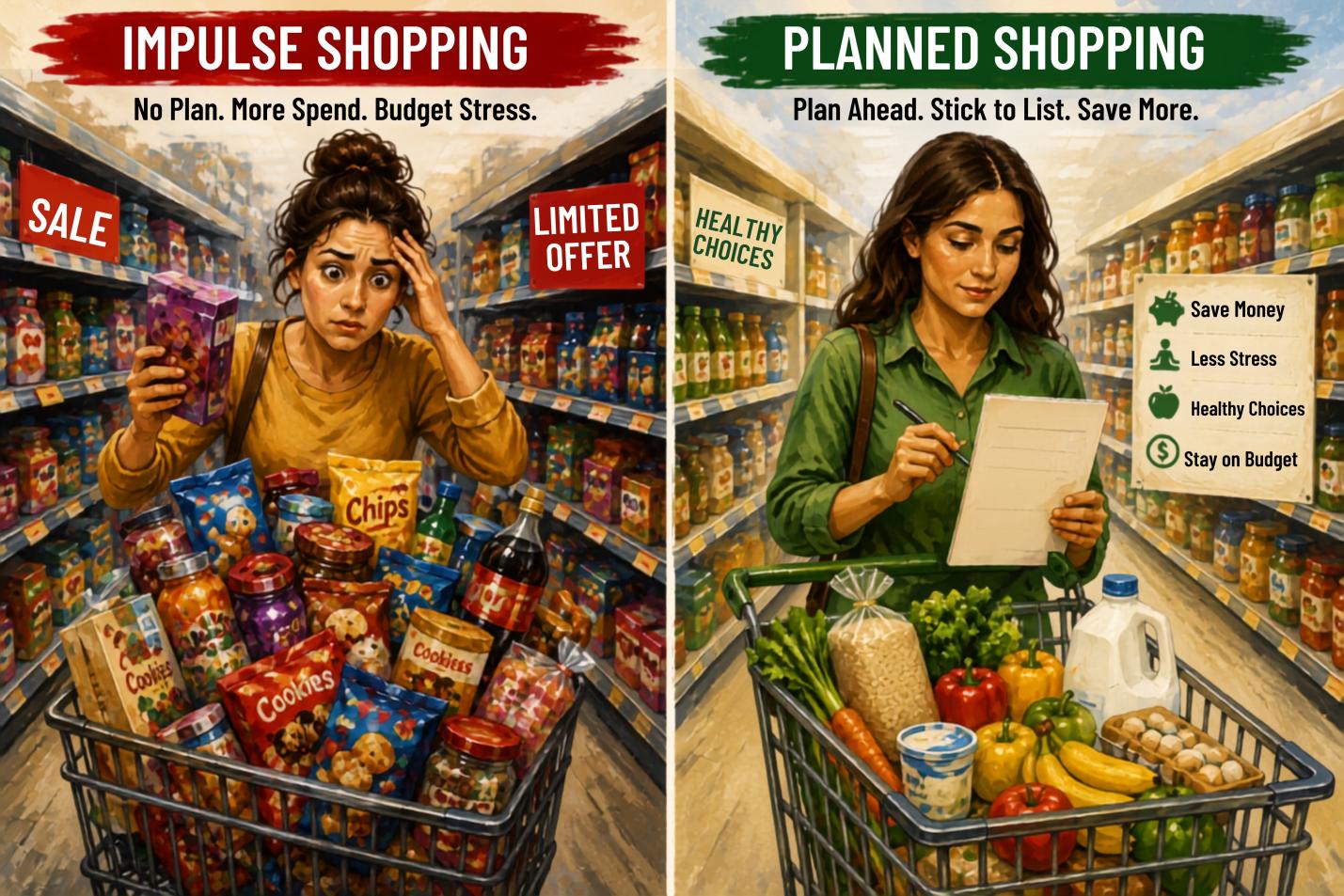
I went to the grocery store for milk. I left with a $200 bag of random items I did not plan to buy. Sound familiar? That is the shelf psychology trap. The store is designed to make you impulse buy. And when inflation hits, that impulse spending can destroy your entire budget. Today, I am showing you exactly how I fixed this using the 50/20/30 rule and a simple system that works. (Golden Tip in Below paragraph)
Why “Grocery Shopping” Is Harder Now (And How Your Budget Gets Destroyed)
Here is what just happened in the grocery market: Food prices are up 30-40% since 2020. Petrol prices affect delivery and transportation, raising grocery costs 3-5% for every dollar increase per gallon. Supply chain issues mean less competition on shelf space. The average family now spends $170 per week on groceries, up from $120 in 2020.
But here is the real problem: Most people go to the grocery store without a plan. They walk in hungry. They see items. Their emotions decide. The shelf has hundreds of products designed to trigger wanting, not needing. The result? Budget gets disturbed. Inflation feels worse. You feel poor even though you are earning the same.
When I stopped planning my grocery shopping, my bill was 40% higher than it needed to be. I had no idea where money went. I bought things I did not need. My budget was chaos.
What Is the “50/20/30 Budget Rule” (And How It Works for Groceries)
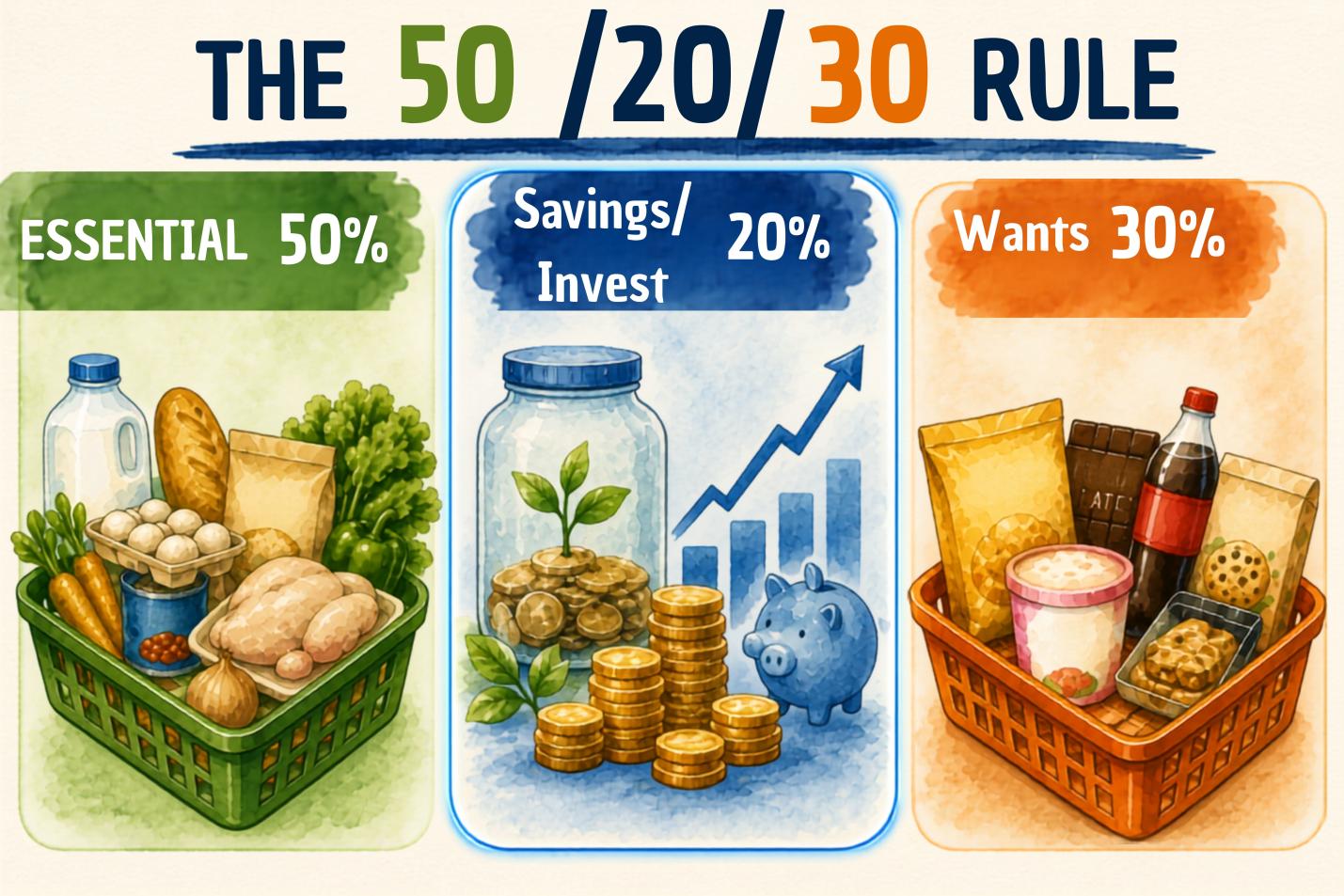
The 50/20/30 rule comes from the book "All Your Worth: The Ultimate Lifetime Money Plan." It is a simple framework: 50% of your income goes to needs, 20% to savings or debt repayment, and 30% to wants. This rule works for your entire budget. But it also works perfectly for grocery shopping.
When I first read about this rule, everything changed about how I shop. Instead of wandering the store, I now have three clear categories. Every item I buy falls into one of them. I know exactly where my money goes before I even leave the house.
How It Breaks Down for “Groceries”
- 50% ESSENTIAL (Needs): Proteins, vegetables, grains, dairy the foods your family needs to survive and be healthy.
- 20% STRATEGIC (Savings): Bulk buys, discounted items, prep items that save you money long term.
- 30% WANTS (Happiness): Treats, premium brands, convenience items the things you enjoy but do not need
Here is a real example: If your monthly grocery budget is $400, that means:
- $200 for essentials: Your chicken, eggs, rice, beans, seasonal vegetables, dairy
- $80 for strategic buys: Bulk meat when on sale, warehouse items, frozen vegetables, pantry staples
- $120 for wants: Your favorite snacks, premium brands, treats, convenience foods
The key insight: You get $120 to spend on happiness. But you spend it intentionally, not impulsively at the checkout counter.
Build Your Essential “Grocery List”: What to Buy vs. What to Skip
Section 1: Essential Groceries (50% of Your Budget)
These are the items that form the foundation of your 50% essentials budget. They are not exciting. They are not premium. They are what your family actually needs.
- Proteins: Eggs (cheapest protein), chicken thighs (cheaper than breast), ground beef, beans, canned tuna
- Vegetables: Frozen vegetables (cheaper and last longer), seasonal produce, carrots, onions, potatoes
- Grains: Rice, pasta, oats, bread, flour bulk buys save 20-30%
- Dairy: Milk, yogurt, store-brand cheese skip premium brands here
- Pantry staples: Oil, salt, spices, canned beans, tomato sauce
For a family of four, this $200/month essentials budget looks like: 30 eggs, 5 lbs chicken, 3 lbs ground beef, 2 lbs beans, 10 lbs rice, 5 lbs vegetables (fresh + frozen), 2 gallons milk, store-brand items throughout.
Section 2: Strategic Items (20% of Your Budget)
Strategic spending is where your budget calculator saves you money. These are intentional purchases that save you cash long-term.
Many people treat the 20% strategic savings as a static savings account—but this mindset keeps your wealth stagnant. Small savings accumulate, but without growth, inflation quietly erodes their value. Instead, deploy this 20% strategically: invest in income-generating assets (dividend stocks, index funds, small business opportunities), skill development that increases earning potential, or bulk purchases that reduce long-term costs. The goal is not just to save money, but to make your money work for you. A $80/month strategic investment in the right asset can compound into serious wealth over 5-10 years. We'll publish a detailed guide on building multiple income streams from this strategic spending stay tuned.
- Bulk buys: Buy meat when 50% off. Freeze it. Eat it over four weeks. One $30 chicken purchase feeds your family for five meals.
- Discounted items: End of season produce, clearance items, warehouse buys
- Prep items: Frozen vegetables (often cheaper than fresh), canned beans (no prep time, same nutrition)
- Storage items: Bulk pantry staples you use monthly buying once instead of four times saves 15-20%
I spend $80/month on strategic buys. That means fewer shopping trips (save time, save impulse purchases), better prices, and items that last.
Section 3: Want Items (30% of Your Budget)
This is your happiness budget. Spend it intentionally. Spend it on things you actually want. Just do not spend it at the shelf Psychology trap.
- Premium brands: Your favorite cereal? Buy it here, not in the essentials budget.
- Treats: Snacks, candy, special items $120/month buys intentional joy
- Convenience: Pre-made meals, ready-to-eat items they cost more, but if you want them, budget for them here
- Impulse items: Magazine cover products, trending foods, whatever makes you happy
The honest truth: This is not deprivation. You get $120 a month to spend on things you enjoy. The difference is: You spend it on purpose, not by accident at the checkout.
How “Inflation” Impacts Your 50/20/30 Rule (And What to Do)
The 50/20/30 rule is a framework, not a prison. When inflation hits, you adjust.
Here is what happened to me: I planned a $400/month grocery budget using 50/20/30. That was essentials $200, strategic $80, wants $120. Then inflation hit. My essentials jumped to $260. Suddenly my framework did not work.
So I adjusted. Now I use 60/15/25 during inflation: 60% essentials ($240), 15% strategic ($60), 25% wants ($100). The principle stays the same. The numbers shift. My budget calculator makes this visible.
Source: U.S. Bureau of Labor Statistics reported food inflation at 30-40% between 2020-2026. Energy costs (petrol) affect delivery and raising grocery store prices.
When petrol prices spiked in 2024, my grocery budget jumped $80/month just from transportation costs. I cut my wants budget from $120 to $80. I kept essentials and strategic buying. The system still worked.
Why You Buy What You Do Not Need (And How Planning Stops It)
The Shelf Psychology Problem
Grocery stores are designed to make you impulse buy. This is not an accident. It is a strategy.
- Eye level: High profit items are at your eye level. Budget items are low. Your eyes guide your purchases.
- Emotional triggers: "Happy" items (treats, snacks, premium brands) are near checkout. Your stress is highest. Your resistance is lowest.
- Volume: The average grocery store has 40,000 products. You cannot evaluate all of them rationally. Your brain shuts down. You buy randomly.
I went in for milk and left with $200 of stuff I did not plan to buy. That is not weakness. That is psychology.
The cost impact: Impulse grocery spending can be 30-50% of your total bill. That means half your grocery budget is unplanned. When inflation hits, that unplanned half becomes dangerous.
How Planning Prevents This
A simple list stops 80% of impulse purchases.
- Pre-made list: You do not wander aisles. You know exactly what to get. In and out in 20 minutes.
- Budget categories: You know which category each item belongs to. You know your $80 want budget is for the month. You stop when it is spent.
- Budget calculator: You track actual spending vs. planned. You see where impulses happen. Week 2: You see you spent $45 on wants instead of $30. You adjust week 3.
- Time saved: Less time in store equals fewer temptations. Less time equals fewer impulses.
When I started planning with my budget calculator, my impulse purchases dropped to almost zero. Not through willpower. Through visibility.
The 24 Hour Rule
See something you want at the store? Do not buy it immediately. Use the 24-hour rule.
- Wait: Do not buy it today.
- Think: Is this essential (50%), strategic (20%), or want (30%)? Does it fit your budget for this week?
- Wait again: If you still want it next week, add it to your next budget.
Most impulse purchases disappear within 24 hours. You think about them. You realize you do not actually want them. The ones that survive the 24-hour rule are real wants. Those get your $120 budget.
This simple rule saves 10-20% on most shopping trips.
Your “Budget Calculator”: See Your Grocery Spending Clearly
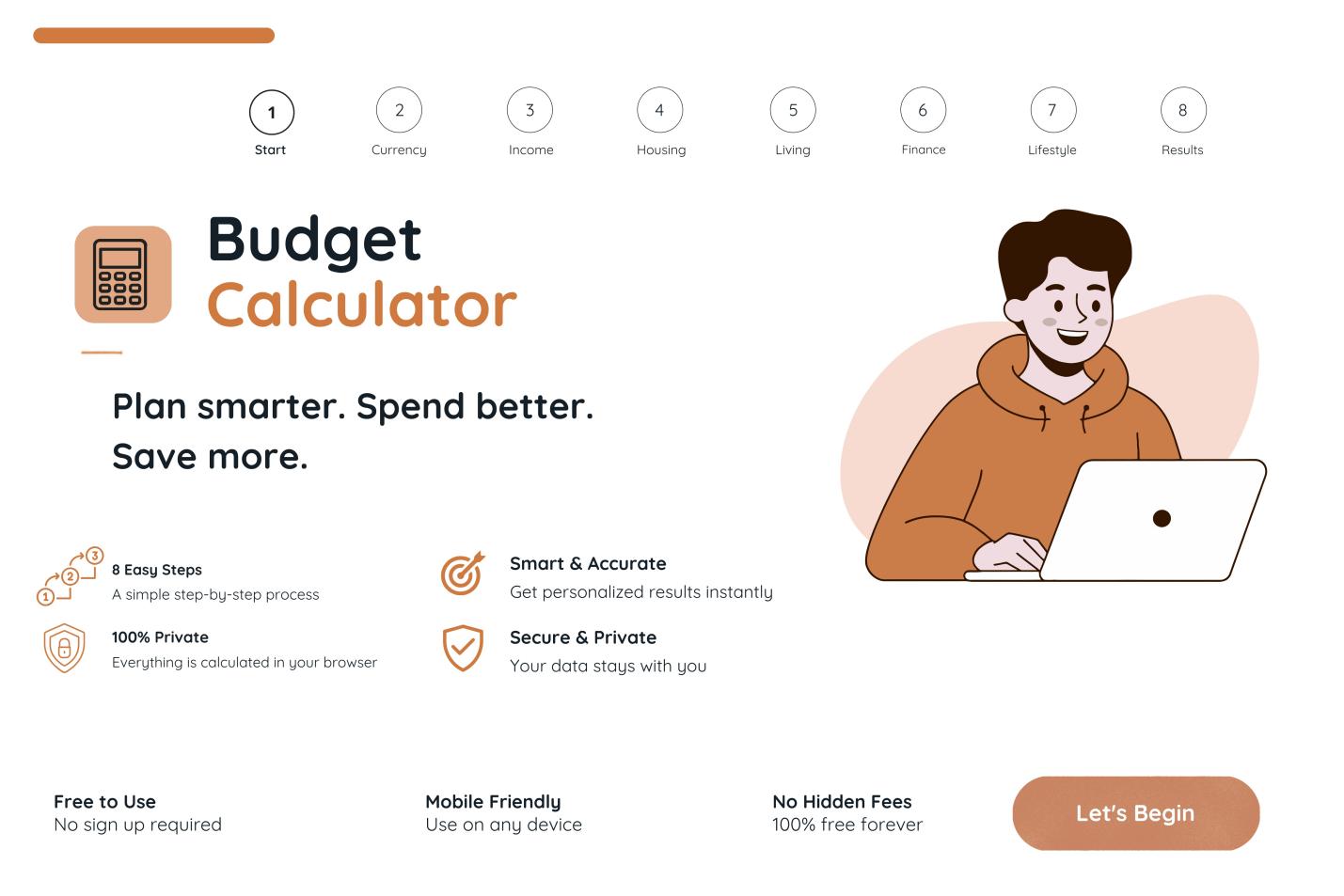
I built a budget calculator for this exact purpose: to make your money visible. When you see where money goes, you can control where it goes.
How to Use It for Grocery Budgeting
- Step 1: Input your monthly grocery budget ($400 in this example)
- Step 2: Split it 50/20/30 ($200 essentials, $80 strategic, $120 wants)
- Step 3: Every grocery trip, enter what you actually spent in each category
- Step 4: Watch the data. See where you overspend. See where you underspend.
- Step 5: Adjust next month based on the data.
Here is what I discovered: I thought I was spending $120/month on wants. The calculator showed me I was actually spending $180. I had no idea. Once I saw it, I changed it.
Week-by-week tracking: If your $400 budget is split 50/20/30, that is roughly $50/week essentials, $20/week strategic, $30/week wants. The calculator shows you each week. You notice patterns. You adjust.
Data visibility equals behavior change. This is not theory. This is what happened to my budget.
What Happened When I Ignored the “50/20/30 Rule”
I want to be honest about my failure. Because that is where the real learning happened.
For two years, I thought I did not need a plan. I was earning okay money. I thought I could handle grocery shopping without a system. I was wrong.
My budget was: $400/month for groceries. My reality was: I was spending $650/month and had no idea where it went. I looked at my bank statements and was shocked. How did I spend that much? Where did the money go?
The answer: Everywhere. No plan. No tracking. Random purchases based on emotions, hunger, and shelf psychology.
Then petrol prices spiked. Inflation hit groceries. My "I can wing it" approach completely collapsed. I was now spending $700+ per month on groceries. My budget was destroyed.
The turning point: I finally listened to the 50/20/30 rule. I started planning. I got my budget calculator. I tracked everything.
What changed: Within one month, I was back to $450/month (manageable within inflation). Within two months, I was at $420. And the best part? My wants budget actually felt better. Because I spent it intentionally. I chose my treats. I did not impulse buy them.
The lesson: Planning is not about deprivation. It is about seeing your money clearly. Once you see it, you can control it.
Start This Week: Three Actions
- Action 1: Calculate Your 50/20/30 Split
If you spend $400/month on groceries, write down:
- $200 essentials
- $80 strategic
- $120 wants
Do this for your actual budget. It takes 15 minutes.
- Action 2: Build Your Essential Grocery List
List 20-25 items you buy every month. Focus on essentials first (proteins, vegetables, grains, dairy). Add strategic items. Save wants for last.
Time: 20 minutes. Use this list every shopping trip.
- Action 3: Use Your Budget Calculator for One Shopping Trip
Enter everything you buy into the calculator. Categorize it as essential, strategic, or want. See where you are vs. where you planned.
Time: 10 minutes at store + 5 minutes review.
That is it. Under one hour total. You now have a system.
Common Questions About the 50/20/30 Rule and Groceries
How do I apply 50/20/30 when groceries are expensive due to inflation?
Adjust the percentages temporarily. During inflation, you might go 60% essentials, 15% strategic, 25% wants. Use your budget calculator to track the new split. Once inflation stabilizes, return to 50/20/30. The principle is flexible. The framework is not.
What are the cheapest essential groceries I can buy?
Eggs ($2-3 per dozen), beans ($1 per lb), rice ($0.50 per lb), frozen vegetables ($1-2 per bag), seasonal produce, store-brand items, canned tuna ($1 per can). These form your 50% essentials budget. Premium brands come from your 30% wants budget if you choose.
How do I stop impulse buying at the grocery store?
Plan before you go. Use a list. Take your budget calculator data (show you where impulses happen). Use the 24-hour rule: if you want something, wait a week. Most impulses disappear. This is not willpower. This is psychology working for you.
Can I use the budget calculator for grocery shopping specifically?
Yes. Input your grocery budget, split it 50/20/30, then track actual spending in each category weekly. The calculator shows you exactly where your money goes. Week to week. Month to month. You see patterns. You adjust.
How does petrol price inflation affect grocery shopping?
High petrol prices increase delivery and transportation costs. This raises grocery store prices 3-5% for every $1 increase in petrol per gallon. Use your budget calculator to see the impact on your spending. When petrol prices spike, you may need to adjust your essentials budget higher temporarily.
Is the 50/20/30 rule flexible?
Yes. It is a framework, not a prison. During inflation or hardship, adjust to 60/15/25 or 55/25/20. The principle stays the same: conscious spending in three categories. Use your budget calculator to find the split that works for your situation.
This article provides educational information about budgeting and the 50/20/30 rule. It is not personalized financial advice. Always consult a financial advisor before making major financial decisions affecting your household.
Share Article
Other Articles

How an Investment Advisor Helps You Make Money Work for You